/Images/AI_Pictures/ricarda-schmidt-author.webp?width=30&name=ricarda-schmidt-author.webp) Ricarda Schmidt
Ricarda Schmidt

Every UK security tender that writes "security services" without naming the service category creates a liability gap before the contract is signed. Manned guarding, alarm monitoring, key holding and mobile response, and event security are distinct disciplines with different SIA licence requirements, different response obligations, and different price structures. Buying them as an undifferentiated block is how incidents get misattributed and disputes get expensive.
In short: Manned guarding, ARC monitoring, key holding, reception security, and event security sit under one colloquial label but are contractually, operationally, and legally separate. Tenders that blur them shift risk onto the contractor. Precise scope language and auditable on-site documentation are the two levers that protect both sides in a dispute.
The counterintuitive fact most procurement teams miss
Alarm monitoring, the service delivered from an alarm receiving centre (ARC), is not a licensable activity under the Security Industry Authority. ARC operators do not carry SIA licences. Their job is to receive the signal, verify it, escalate it, and log it. There is no obligation to dispatch anyone to site unless a separate key holding or mobile response contract exists alongside the monitoring contract.
This is the single point that collapses most "the security company failed" narratives after a break-in at an alarm-monitored site. If the only contract in place was ARC monitoring, nobody from the contractor was ever scoped to attend the premises. The ARC has performed its obligations if the signal was handled to protocol and the police or a separate response provider was notified. Attributing a guard failure to an ARC provider is attributing failure in a service that was never bought.
The five manned guarding and security categories that get conflated
UK private security splits into five operational categories that tenders routinely bundle. Each carries its own licence position, its own response model, its own documentation standard, and its own price. Anyone drafting or reviewing a statement of work should know which one is actually being specified.
1. Alarm monitoring (ARC)
Signals from intruder, fire, and hold-up systems route to an alarm receiving centre that verifies the event, escalates to police via the Unique Reference Number (URN) process, and calls out a key holder or mobile response unit where contracted. The ARC operates remotely. No personnel are stationed at the protected premises. Quality markers in UK tenders typically reference NSI certification (ARC Gold), 24/7 redundancy, and documented response protocols. ARC work is not SIA-licensable.
2. Key holding service, alarm response and mobile security patrol
A mobile unit attends the premises after an alarm. Buyers variously call it key holding, alarm response, or mobile security patrol depending on the tender. The unit checks the site, secures where needed, logs the intervention, and hands over to police or the client. Key holding is an SIA-licensable activity, separate from security guarding. The officer who attends is a lone worker during the visit, which brings HSE lone working duties into scope. Urban response SLAs commonly sit at 20-45 minutes; rural coverage is longer. Mobile response replaces nothing a static guard does. It is an alarm-triggered attendance, not a continuous presence.
3. Manned guarding (static guarding and site security)
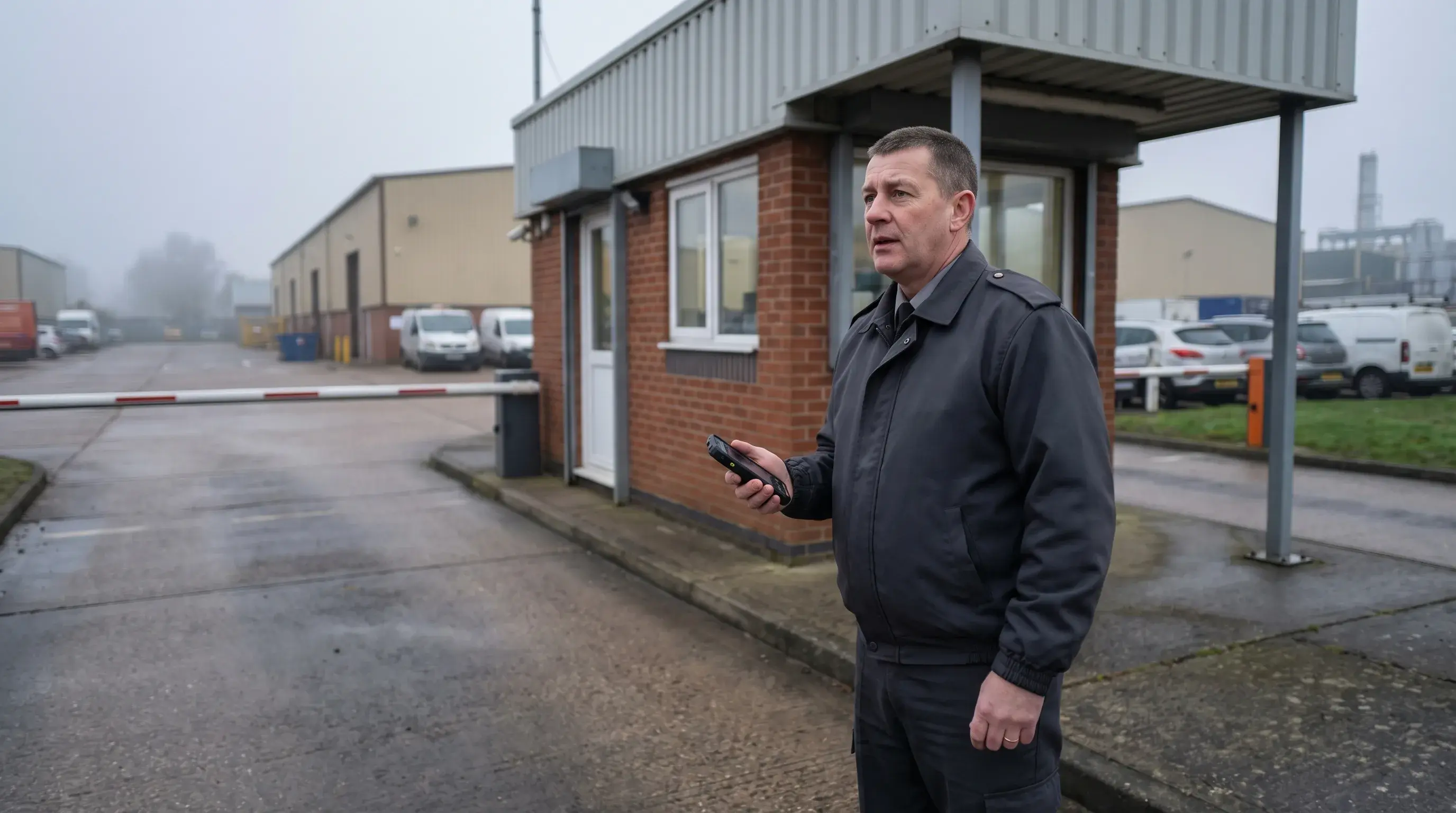
Personnel are posted at the site on a defined rota: patrols, access control, incident handling, shift logs. UK tenders refer to this as manned guarding, static guarding, or site security. In Germany the same activity splits into Objektschutz and Werkschutz, but UK licensing makes no such distinction. A guard on a retail loading bay and a guard on an industrial gatehouse both hold the Security Guarding SIA licence. Manned guarding is the only one of the five categories where a defined headcount is present for the full shift. Typical quality anchors include BS 7499 compliance and SIA Approved Contractor Scheme status.
4. Reception and front-of-house security
Access control, visitor registration, badge issue, deliveries, switchboard. Service-led tasks with a security component. UK tenders often label these "concierge security" or "corporate reception" and bundle them with static guarding on the same contract. That can work, but only if the scope separates which staff hold an SIA licence for which duties. A pure administrative receptionist does not need a licence. The moment the same person controls access or intervenes in an incident, they do.
5. Event security
Temporary deployments with dense planning: bag checks, entry control, crowd flow, liaison with police and emergency services. Different headcounts, different qualifications, different documentation from static guarding. The hard line runs between door supervision (SIA-licensed, required at licensed premises and for access control) and event stewarding (not licensable where duties stay within direction, customer service, and seat-finding). The BSIA Crowd Management Section treats this as a specialist discipline, not a variation of static guarding.
Cash-in-transit, close protection, and CCTV monitoring sit alongside these categories but are their own specialisms with their own SIA licences. For the typical procurement brief, the five above are the fault lines that actually matter.
Why category blur damages the whole sector
A single misattributed incident looks local. In aggregate, this kind of blur produces pressure in three directions: on contractor reputations, on the quality of public and private procurement, and on pricing.
When the press or a customer suggests a "security officer missed a break-in" at a site where nobody was ever scoped to be on-site, the expectation that forms survives past the story. It re-enters the next tender. Procurement teams write "comprehensive security provision," mean manned guarding, budget for ARC monitoring, and then challenge the supplier for the gap they specified. The British Security Industry Association has spent years pushing back on exactly this flattening of service categories.
The practical consequence for directors of UK security firms is narrower than the industry-wide problem. You cannot stop every headline. You can document every contract so that, when a dispute surfaces, the scope that was sold and the service that was delivered are both provable line by line. That evidence starts in the bid response and ends with the last log entry of the night shift.
What a manned guarding tender should actually specify
A clean statement of work for manned guarding services pins down five elements: the service category (ARC, mobile response, manned guarding, reception, event), the hours and rota in shifts not headlines, measurable response or intervention SLAs, documentation depth with formats and reporting cadence, and a named escalation chain with response windows.
A security tender that writes "security services" without this structure either invites the lowest-cost interpretation or a post-award scope fight. A contractor that answers an ambiguous brief without flagging the ambiguity is pricing against an expectation they do not yet know. The effort of writing precise scope language is paid back on both sides in the first audit cycle. For a deeper look at positioning against the tender process itself, see how to win security tenders.
Documentation is the defence when scope is challenged
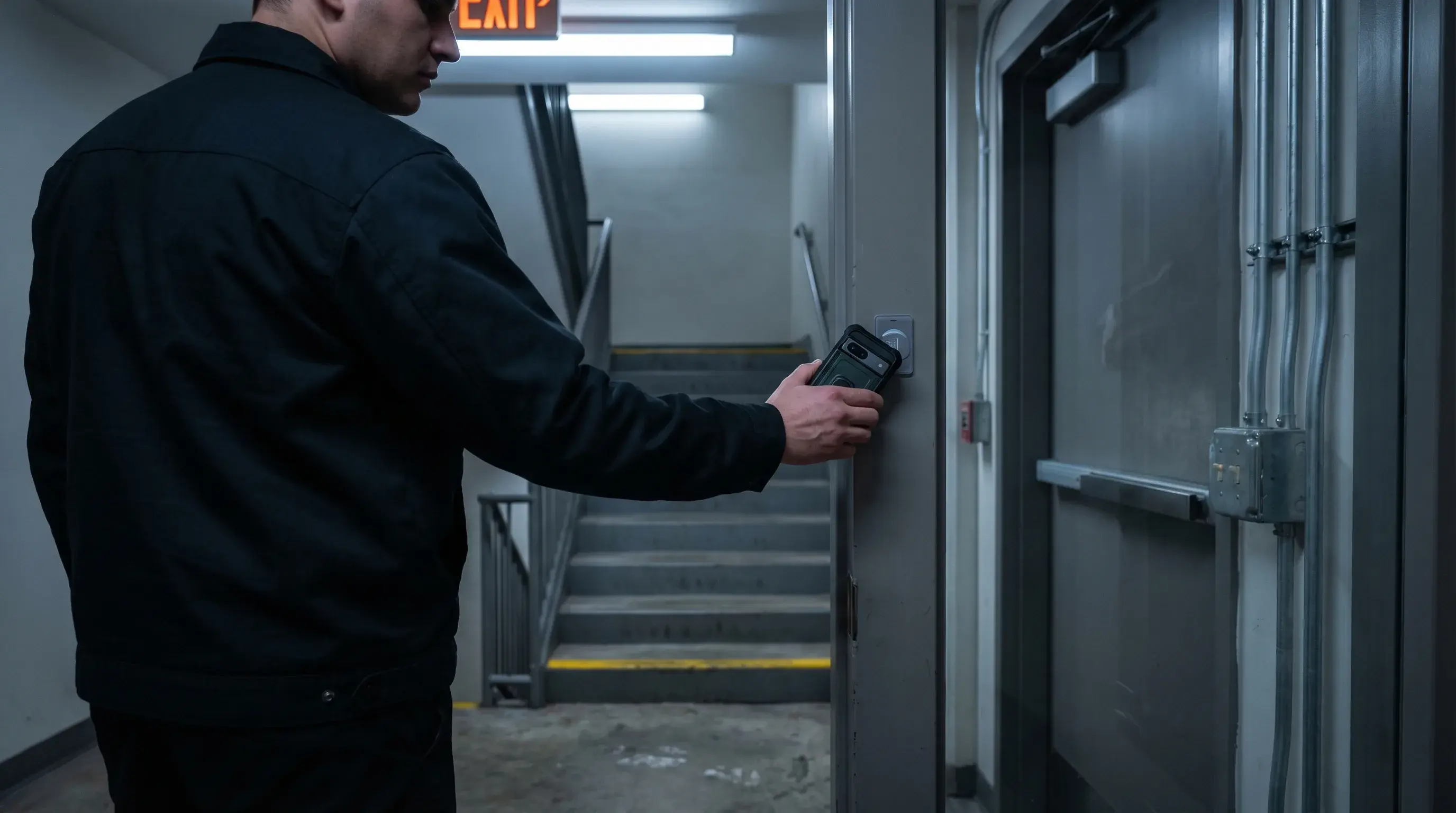
When the question in a dispute becomes "was the service actually delivered", the defence stands or falls on documentation. Paper occurrence books and shared spreadsheets rarely survive serious scrutiny. COREDINATE, a digital guard tour and patrol system built for UK contract security firms, produces an audit-grade record of patrols, scans, incidents, and handovers, with timestamps, geo-data, and an unbroken chain from first checkpoint to end-of-shift report. In a contested conversation, it is the log that counts, not the supplier statement.
For sites with single-posted guards or overnight cover, the lone worker dimension is inseparable from the service itself. An officer working alone is covered by employer duty of care. Lone worker technology compliant with BS 8484, including a man-down alarm and ARC-linked escalation, is part of compliant service delivery, not a premium add-on. It is also part of the documentation trail presented to the client at review. COREDINATE, the digital guard tour system, builds lone worker protection into the same reporting layer used for checkpoints and incidents.
For contractors running hybrid scopes (reception plus static guarding plus event cover), a single security services software platform is the cleaner structural answer. Unified rotas, consistent incident capture across posts and events, and audit-ready reporting in one place. The effect is less dramatic than a missed incident averted. It shows up in every tender response, every ACS audit, and every quarterly client review.
Frequently asked questions
What is the difference between alarm monitoring (ARC) and mobile response?
Alarm monitoring is the remote receipt and handling of a signal from an ARC. Mobile response is the physical attendance at the site after that signal is verified. They are separate contracts with separate SLAs. An ARC-only contract carries no obligation for anyone to arrive at the premises; that attendance is bought under a key holding or mobile response agreement.
Does an ARC operator need an SIA licence?
No. ARC operation is not a licensable activity under the Private Security Industry Act. The operator receiving and escalating the signal works outside the SIA licensing regime. The officer who attends the site in response, by contrast, needs a Key Holding licence, and often a Security Guarding licence depending on the attending duties.
What is an SIA Approved Contractor and why does it matter in procurement?
The Approved Contractor Scheme is a voluntary SIA scheme that independently assesses a contractor's management and service standards. ACS status is awarded by service category, not as a blanket endorsement. Public sector and larger corporate tenders often set ACS as a pass/fail prerequisite at the pre-qualification stage, so non-ACS suppliers are filtered out before price is read.
Does manned guarding require an SIA licence?
Yes. Manned guarding personnel deployed at a UK site hold the Security Guarding SIA licence. The licence covers static guarding, site security, and patrol duties. It does not cover door supervision at licensed premises, key holding, or close protection. Each of those requires its own licence. A tender that specifies "manned guarding" is specifying SG-licensed officers; any other category needs its own licence line in the scope.
What should a security services tender specify line by line?
At minimum: the service category, the hours and shift pattern, measurable response SLAs, documentation and reporting requirements, and the named escalation chain with response windows. Anything less pushes interpretation risk onto the contractor and sets up scope disputes after award.
How does digital documentation support ACS audits and client reviews?
An audit-grade log of patrols, checkpoint scans, incidents, and handovers, complete with timestamps and geo-data, is directly usable evidence in an ACS reassessment and in client quarterly reviews. It replaces reconstructed paper records with a contemporaneous trail, which is what assessors and clients are looking for when service delivery is questioned.
See how COREDINATE's guard tour system documents every shift
Run patrols, checkpoint scans, incident reports, and lone worker cover on one audit-ready platform. Built for UK contract security firms that need scope, SLA, and ACS evidence in one place.
Start your free 14-day trial →/Images/Product_images/Testset_incl_Icons_400Pixel.webp)
You are not yet using the COREDINATE® guard control system? Then it's time to put our test set through its paces for 14 days free of charge and without obligation.
/Images/Icons/Social%20Media/facebook_gray.svg)
/Images/Icons/Social%20Media/linkedin_gray.svg)
/Images/Icons/Social%20Media/x_gray.svg)
/Images/Icons/Social%20Media/xing_gray.svg)